
BET surface area
Sets the adsorption ceiling.
BET: total internal surface area available for adsorption.

R&D Centre & Testing
Inside the core of our work: a defining testing and application support centre built for our customers.
↓See what we testRoutine physical and chemical checks on every batch.
Our gas testing capability follows below.
Sets the adsorption ceiling.
BET: total internal surface area available for adsorption.

Which molecules get captured.
Pore size: proportion of micro-, meso- and macropores.

Bed weight and shelf stability.
Moisture: residual water in the media.

A quick microporosity check.
Iodine: adsorption capacity proxy via iodine uptake.

Dust and bed life.
Hardness: resistance to mechanical breakdown.

Pharma and food-grade purity.
Ash: inert, non-adsorptive residue.

Vessel sizing and freight.
Bulk density: mass per unit volume of packed media.

Downstream water chemistry.
pH: surface acidity or alkalinity of an aqueous extract.

Adsorption activity of the carbon.
CTC adsorption: Quantifies microporous adsorption volume and baseline organic solvent capacity
Media is challenged with real target gases under controlled concentration, humidity and flow, and we measure breakthrough. This is how we match each customer to the right grade.
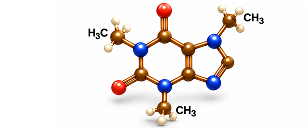
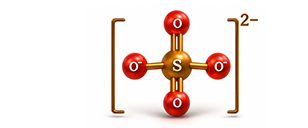
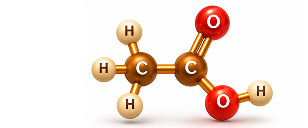

Concentrations are the typical upper limits of in-house testing (up to).
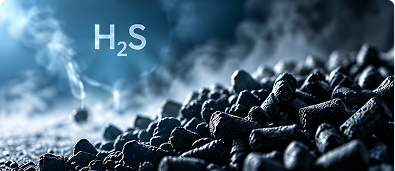
accelerated H2S breakthrough capacity of granular and pelletised carbon
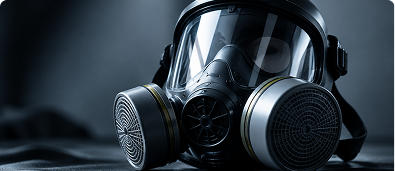
respiratory protective devices, gas filters and combined filters
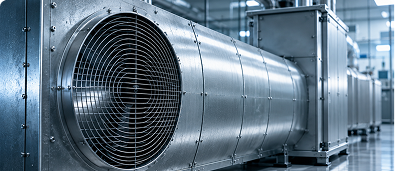
gas-phase air cleaning media and devices for general ventilation
These are test methods we test to, not certifications.
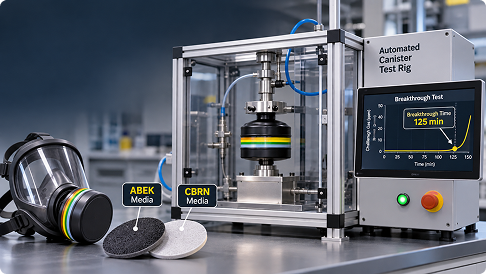
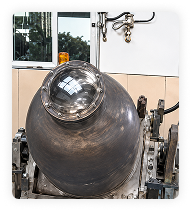
An automated canister test rig measures the breakthrough time of respirator filter media and canisters. We use it to develop and release our ABEK and CBRN media.
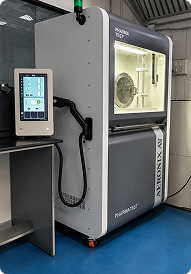
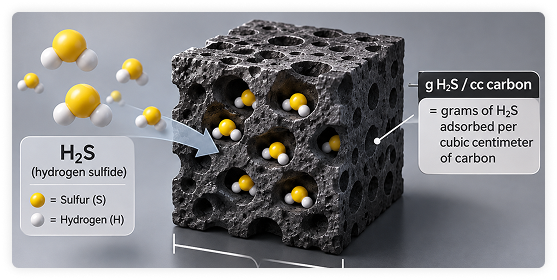
Accelerated H2S breakthrough capacity of granular and pelletised carbon, the figure odour control and biogas integrators compare media on.
Rig set-up line: relative humidity control - N2 humidity control - N2 and air mixing - (N2 + air) and H2S mixing - flow control valves and rotameters.
H2S challenge: up to 10,000 ppm
Result reported as: g H2S / cc carbon
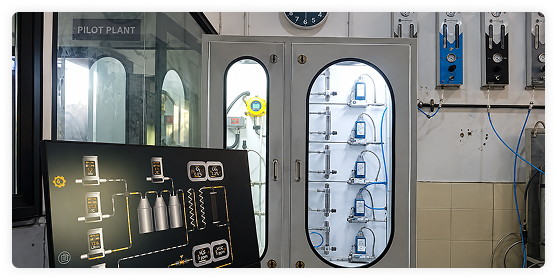
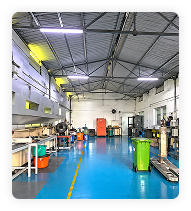
Takes new formulations from lab scale to pilot batches and prototype samples for customer trials.
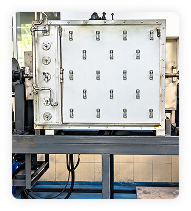
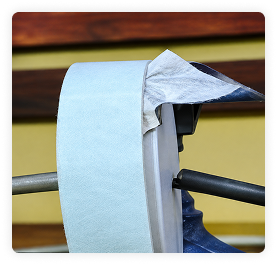
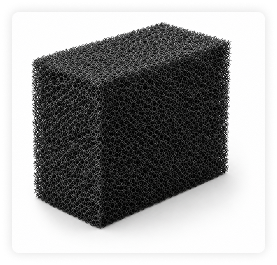
Gas adsorption performance of filter fabrics and foam filter materials, on our target gases.
Challenge Concentration : Up To 500 Ppm
Nothing is tested against a protocol you haven’t already agreed to.